
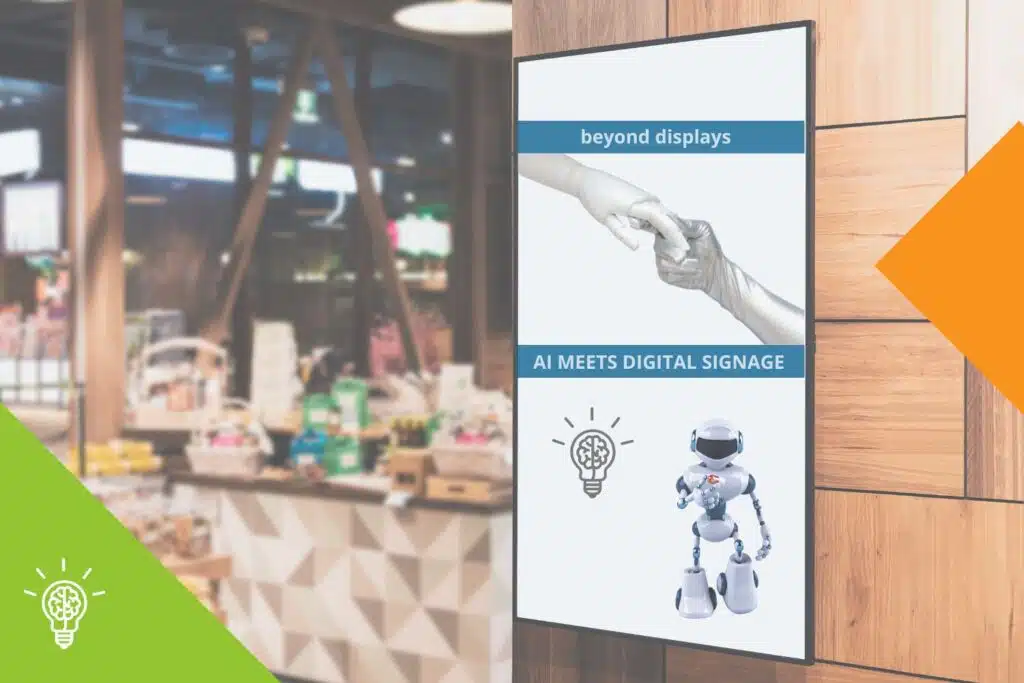
Personalization and real-time customization
AI allows content to be adapted to target groups and situations in real time. For example, a display recognizes whether a young family, a business customer or a technician is passing by - and displays appropriate content. Weather data or current stock levels can also be incorporated into the display. This makes messages more relevant and increases engagement(friendlyway.com).
Automated content creation with generative AI
A major effort in digital signage lies in content production. Generative AI can partially take over this task: Product descriptions, layouts or entire campaigns are created automatically based on real-time data. Retailers are already using this to update regional offers or promotions at all locations simultaneously without manual intervention(azilen.com).
Sensors, IoT and cloud: smart ecosystems
Displays are increasingly being networked with sensors, cameras and other systems. This results in solutions that recognize how many people are in a room, how long they stay there or which content attracts the most attention. In combination with cloud platforms, campaigns can be controlled centrally and optimized locally at the same time(invidis.de).
Immersive technologies: AR, VR and 3D
Digital signage is no longer just seen, but experienced. AR overlays, VR applications or 3D displays offer completely new possibilities for interaction - for example, when customers configure a product in real time or production employees are guided through complex processes via displays(mcubedigital.com).
Sustainability and energy efficiency
In addition to functionality, the focus is also shifting to energy consumption. New generations of LEDs save up to 80% electricity compared to older LCDs. E-paper displays, which consume almost no power when static, are particularly exciting - ideal for use in buildings, in transportation or for changing displays. At ISE 2025, Samsung presented its Color E-Paper: lightweight, energy-saving and centrally controllable(news.samsung.com).
The advantages are obvious: less manual effort, more relevance, better use of data and a clear contribution to sustainability.
As promising as the technology is, companies must also keep an eye on the challenges:
Digital signage is evolving from a pure display platform into an intelligent communication tool. Hyper-personalization, automated content, immersive experiences and sustainable technologies will shape the coming years. For companies, this means that investing in flexible, AI-supported systems today not only gives them a head start in terms of efficiency and customer loyalty, but also strengthens their own future viability.
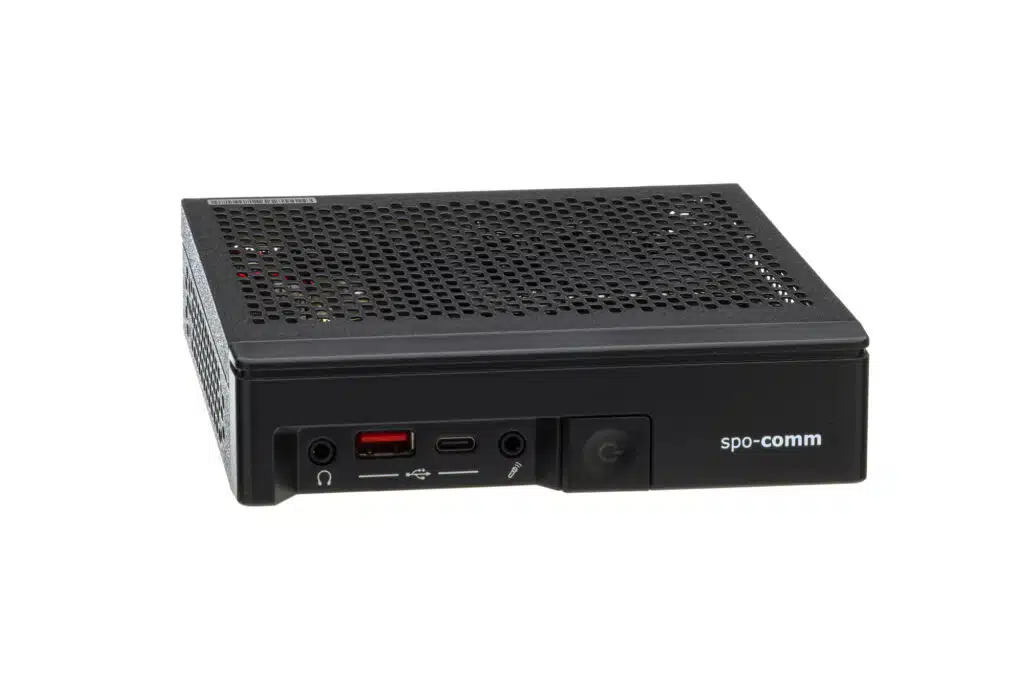
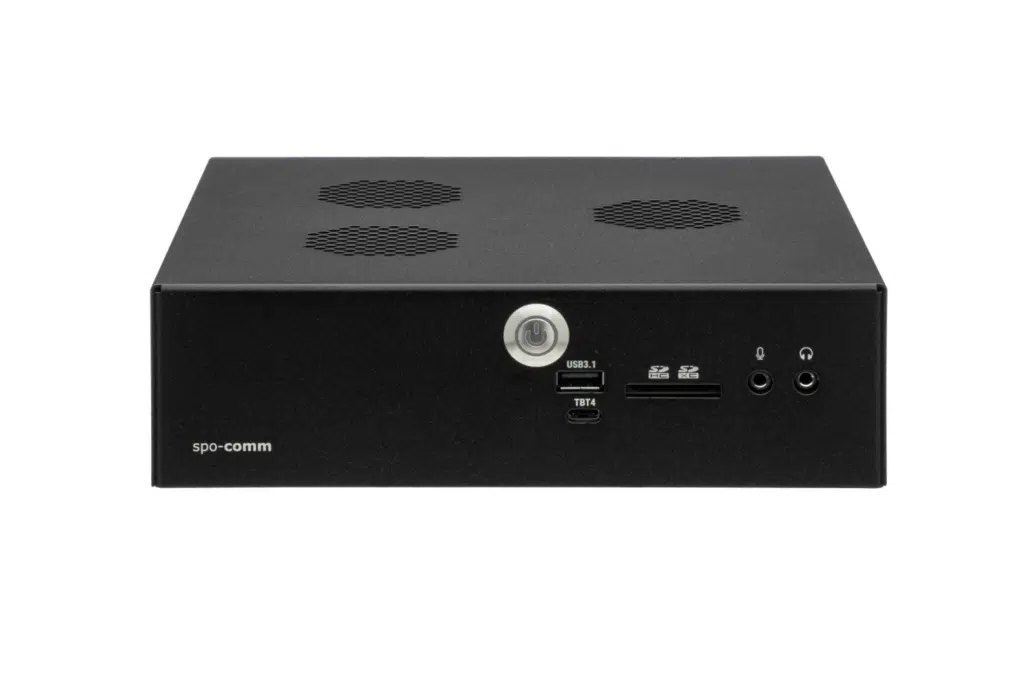
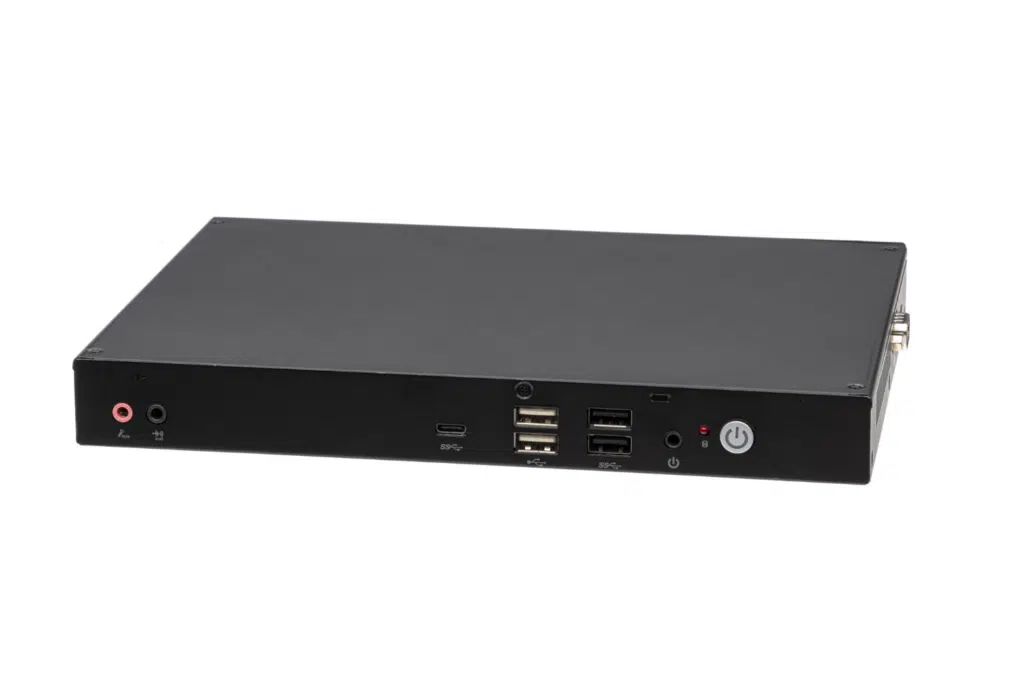
Of course, you can also find a wide range of digital signage devices in our spo-comm Mini-PC range. From CORE 5 Ultra and KUMO PCs to the ONE or BOX series, we have everything your heart desires. Whether for AI applications, point of sale, virtual reality (VR), argumented reality (AR) or video walls - we offer the right solution for your application!
Do you have any questions about our mini PCs or how to use them? Do not hesitate to contact us!

After looking at the Internet of Things and the variants of Windows IoT Enterprise in the first arti...
What exactly is Windows 10 IoT Enterprise? To put it simply: the embedded version of Windows 10. But...
In the world of displays, we constantly come across terms such as HD, Full HD or 4K. They sound tech...
You need to load content from reCAPTCHA to submit the form. Please note that doing so will share data with third-party providers.
More Information