

23.10.2018
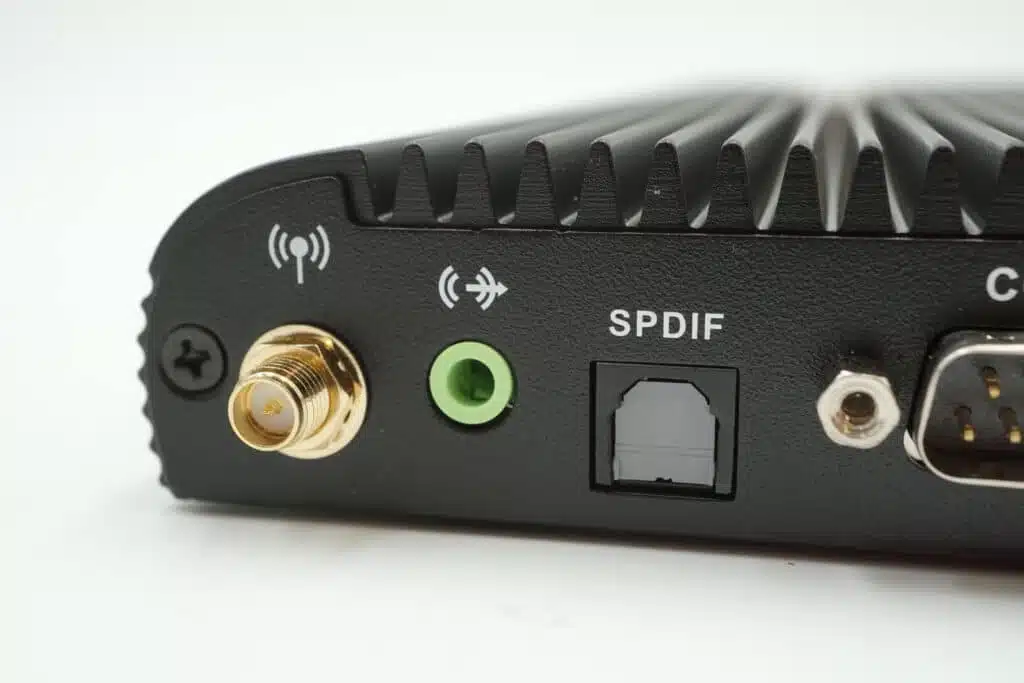
The abbreviation SPDIF, often also S/PDIF, stands for "Sony/ Philips Digital Interface". Behind the serial interface are the companies Sony and Philips, who created the SPDIF specification for the transmission of digital stereo or audio signals. The special feature is that SPDIF can transmit both optically and electrically. The interface is mainly used with CD players, between DVD players and in the home cinema sector, as the connection means that only a single cable is required and cable harnesses can be avoided.
Like any other interface, the SPDIF also has special connectors. Here we differentiate between electrical connectors and connectors for optical signal transmission. A so-called TOSLINK connection is used for the latter. The electrical transmission relies on an RCA connection with coaxial cable, in rare cases also on a 3.5 mm jack plug.
Both HDMI and SPDIF transmit data digitally, whereby HDMI works purely electronically and SPDIF can also be optical. In contrast to HDMI, SPDIF is much older and therefore has an ever-increasing disadvantage: SPDIF was initially only intended for PCM and can no longer transmit the enormous bandwidths now used by DTS, for example. Although it is possible to downmix the data, this causes a significant loss of performance, which is not the case with HDMI. Another advantage of HDMI is the simultaneous transmission of video and audio data, which eliminates the need for an additional cable.
Discover all spo-comm Mini-PCs!
In the world of displays, we constantly come across terms such as HD, Full HD or 4K. They sound tech...
Edge AI is the combination of artificial intelligence and local data processing directly at the poin...
This was our start to the new year: the current memory and CPU situation continues to have a major i...
You need to load content from reCAPTCHA to submit the form. Please note that doing so will share data with third-party providers.
More Information